

Exercises to Improve Arm Function After a Brachial Plexus Injury
A brachial plexus injury can significantly impact arm function, affecting daily activities and quality of life. However, with proper rehabilitation, stretches for brachial plexus and targeted brachial plexus injury exercises, it’s possible to improve arm strength, mobility, and overall function. A brachial plexus injury can dramatically affect a person’s ability to move, feel, and use their arm normally. Everyday activities such as lifting objects, dressing, writing, or even raising the arm can become difficult or impossible depending on the severity of nerve damage. While medical evaluation and, in some cases, surgical intervention are essential parts of care, if you’re also experiencing other spinal conditions such as cervical spine issues or spinal cord compression, seeking a second opinion can offer valuable insight into comprehensive treatment options.
With proper guidance, consistency, and patience, targeted exercises can help maintain joint mobility, reduce stiffness, prevent muscle wasting, and support nerve recovery over time. This guide explains how brachial plexus injuries affect arm function, when exercises are appropriate, and which brachial plexus injury exercises are commonly recommended during different stages of recovery.This blog will explore five effective exercises designed to aid recovery from brachial plexus injuries.
Understanding Brachial Plexus Injuries
Before diving into the exercises, it’s crucial to understand what a brachial plexus injury entails. The brachial plexus is a The brachial plexus is a complex network of nerves that originates from the spinal cord in the neck and travels through the shoulder into the arm and hand. These nerves control muscle movement and sensation in the shoulder, arm, elbow, wrist, and fingers. When this network is injured, communication between the brain and the arm becomes disrupted.
Brachial plexus injuries can range from mild nerve stretching to severe nerve tears or avulsions, where the nerve is pulled away from the spinal cord. The extent of the injury directly influences recovery potential and determines whether conservative management, surgery, or a combination of treatments is required.
Common causes of brachial plexus injuries include:
- Traumatic accidents such as car or motorcycle collisions
- Sports injuries involving forceful shoulder movement
- Birth-related trauma in infants
- Tumors, inflammation, or radiation injury affecting nerve pathways
Symptoms may include weakness, numbness, tingling, burning pain, or complete loss of movement in part or all of the arm. Because nerve tissue heals slowly, recovery often takes months or even years, making brachial plexus injury exercises a long-term commitment rather than a short-term fix.
5 Beneficial Exercises for Brachial Plexus Injury Recovery
Rehabilitation after a brachial plexus injury requires patience, consistency, and carefully selected movements that support stretches for brachial plexus nerve healing without causing further strain. The following brachial neuritis exercises are commonly recommended during rehabilitation to help preserve mobility, rebuild strength, and support functional recovery of the arm and hand. These exercises are typically introduced gradually and adjusted based on individual progress and medical guidance.
1. Shoulder Shrugs
Purpose
Shoulder shrugs primarily target the trapezius muscles, which often retain partial nerve function even when other shoulder or arm muscles are weakened. Strengthening the trapezius can help improve shoulder stability, posture, and overall upper limb mechanics. This is especially important in brachial plexus injuries, where shoulder droop or instability can contribute to discomfort and functional limitations.
Maintaining strength in these muscles also helps compensate for weakness in other shoulder stabilizers while nerve recovery is ongoing.
How to Perform
The exercise can be done either sitting or standing, depending on comfort and balance.
- Keep your arms relaxed at your sides.
- Slowly raise both shoulders upward toward your ears in a controlled manner.
- Hold the elevated position for 2–3 seconds, focusing on muscle engagement rather than force.
- Slowly lower your shoulders back to the starting position.
- Perform 10–15 repetitions for 2–3 sets, resting between sets as needed.
Clinical Tips
Movement should be smooth and controlled. Avoid rolling the shoulders or jerking the motion, as this may strain surrounding structures. As strength improves, this exercise may be combined with posture training to support long-term shoulder alignment.
2. Pendulum Exercise
Purpose
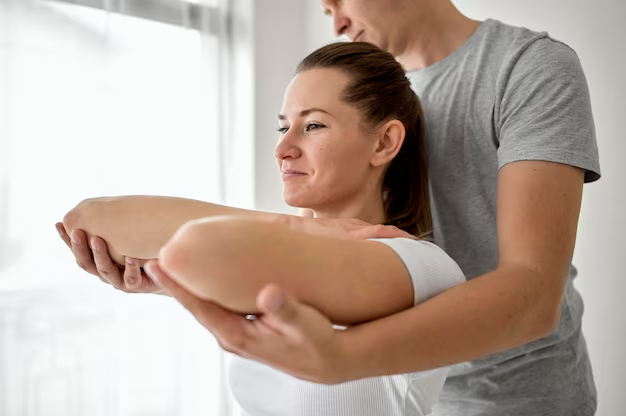
The pendulum exercise is a gentle, low-impact movement designed to improve shoulder mobility while minimizing stress on healing nerves. It is particularly useful in the early stages of recovery when active muscle contraction may be limited or uncomfortable. By using gravity rather than muscle force, this exercise helps reduce stiffness, improve circulation, and maintain joint flexibility.
Pendulum movements are often included in brachial plexus injury exercises to prevent frozen shoulder and other secondary complications.
How to Perform
This exercise should be done in a relaxed environment.
- Lean forward slightly, supporting your body with your unaffected arm on a stable surface such as a table or chair.
- Allow your affected arm to hang freely toward the floor.
- Gently swing the arm in small circular motions, keeping the movement relaxed and controlled.
- Gradually increase the size of the circles as comfort allows.
- Continue for 30 seconds to 1 minute, repeating 2–3 times per day.
Clinical Tips
The movement should come from the body’s momentum rather than active shoulder muscle engagement. If pain increases, reduce the range of motion or pause the exercise and consult your healthcare provider.
3. Wrist Flexion and Extension
Purpose
Wrist mobility and strength are essential for hand function, grip, and coordination. In some brachial plexus injuries, nerve involvement can weaken wrist control or reduce range of motion. Wrist flexion and extension exercises help preserve joint flexibility, prevent stiffness, and support gradual strength recovery.
These brachial plexus injury exercises are particularly important for maintaining independence in daily activities such as writing, eating, and personal care.
How to Perform
This exercise is best performed while seated at a table.
- Rest your forearm on a table with your wrist hanging off the edge, palm facing down.
- Slowly bend your wrist upward as far as comfortable.
- Then gently lower the wrist downward in a controlled motion.
- Perform 10–15 repetitions for 2–3 sets.
Clinical Tips
Movements should remain within a pain-free range. As strength improves, light resistance may be added under the supervision of a physical or occupational therapist. Avoid gripping tightly during early recovery unless specifically instructed.
4. Elbow Flexion and Extension
Purpose
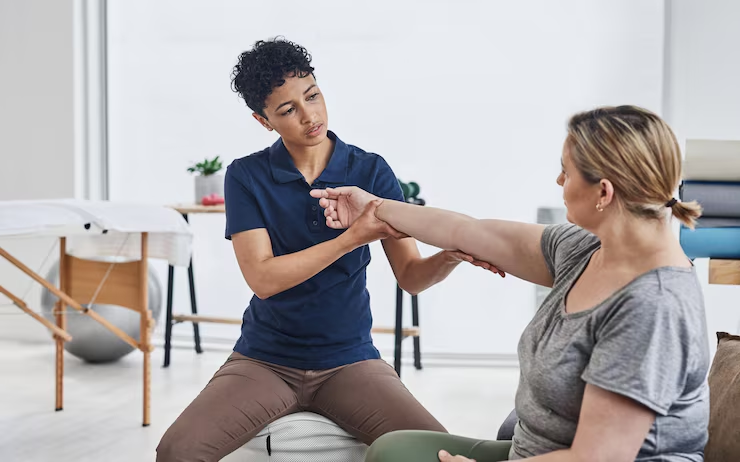
Elbow flexion and extension exercises target the biceps and triceps muscles, which play a critical role in arm positioning and functional tasks. These muscles are commonly affected in brachial plexus injuries, leading to difficulty lifting, pushing, or supporting objects.
Maintaining elbow mobility through brachial plexus injury exercises helps prevent joint stiffness and supports functional arm use as nerve recovery progresses.
How to Perform
This exercise can be performed while seated.
- Sit comfortably with your affected arm supported on a table, palm facing upward.
- Slowly bend your elbow, bringing your hand toward your shoulder.
- Hold the position for 2–3 seconds, focusing on controlled movement.
- Slowly straighten the arm back to the starting position.
- Repeat 10–15 times for 2–3 sets.
Clinical Tips
If active movement is difficult, the unaffected arm can assist initially. Progression should be gradual, with careful attention to fatigue or compensatory shoulder movement.
5. Finger Exercises
Purpose
Hand and finger function is essential for fine motor skills and independence. Brachial plexus injuries may impair finger movement, grip strength, and coordination. Finger exercises help maintain dexterity, prevent stiffness, and support neural re-education as nerve signals return.
These brachial plexus injury exercises are often performed frequently throughout the day due to their low physical demand.
How to Perform
Finger exercises can be done seated at a table.
- Place your hand flat on the table with fingers extended.
- Slowly lift one finger at a time, then lower it back down.
- Next, practice touching your thumb to each fingertip in sequence.
- Perform each movement 10–15 times for 2–3 sets.
Clinical Tips
Focus on precision rather than speed. If fatigue develops, rest before continuing. As coordination improves, additional fine motor tasks may be introduced by a therapist.
Important Considerations When Performing Brachial Plexus Injury Exercises
Rehabilitation following a brachial plexus injury requires careful planning and close attention to how the body responds to movement. While brachial plexus injury exercises are a critical part of recovery, they must be performed thoughtfully to support nerve healing and prevent further brachial neuritis exercises injury. The following principles should guide every stage of rehabilitation.
When performing these exercises, it’s crucial to keep the following points in mind:
- Start slowly: Early rehabilitation should focus on gentle, controlled movements rather than strength or endurance. Beginning with low repetitions and minimal resistance allows the muscles and joints to adapt without placing excessive stress on healing nerves. As strength, coordination, and comfort improve, exercise intensity can be increased gradually under professional supervision. Rushing this process may lead to setbacks or prolonged recovery.
- Listen to your body: Pain is not an indicator of progress in nerve recovery. While mild discomfort or muscle fatigue may occur during rehabilitation, sharp pain, burning sensations, increasing numbness, or worsening weakness are warning signs that should not be ignored. These symptoms may indicate nerve irritation or strain and should prompt immediate modification or cessation of the exercise. Consulting a healthcare provider ensures that exercises remain safe and appropriate for your recovery stage.
- Consistency is key: Regular performance of brachial plexus injury exercises is one of the most important factors in achieving meaningful improvement. Consistent, daily movement supports circulation, joint flexibility, and neuromuscular re-education. Short, frequent exercise sessions are often more beneficial than infrequent, high-intensity workouts. Over time, consistency helps translate small gains into lasting functional improvement.
- Combine with other treatments: Exercises alone are rarely sufficient for full recovery. Optimal outcomes are achieved when rehabilitation exercises are combined with professional physical therapy, occupational therapy, and medical management. In more severe cases, surgical intervention may be necessary to restore nerve function or relieve compression. A multidisciplinary treatment approach ensures that exercises complement other therapies rather than replace them.
- Personalized approach: Every brachial plexus injury is unique. The type of nerve injury, its location, severity, and the patient’s overall health all influence which exercises are appropriate and when they should be introduced. A personalized rehabilitation plan developed by a qualified healthcare professional ensures that brachial plexus injury exercises are tailored to individual needs, reducing the risk of complications and improving long-term outcomes.

Conclusion
Recovering from a brachial plexus injury can be a challenging journey, but with dedication and the right brachial plexus injury exercises, significant improvements in arm function are possible. The five exercises outlined above – shoulder shrugs, pendulum exercise, wrist flexion and extension, elbow flexion and extension, and finger exercises – can form a solid foundation for your rehabilitation program.
Remember, patience is crucial in this process. Recovery from brachial plexus injuries can take time, and progress may be gradual. Celebrate small victories and stay committed to your rehabilitation plan. While these exercises can be beneficial, they should be part of a comprehensive treatment plan developed by healthcare professionals.

For expert guidance on managing brachial plexus injuries and other spine-related conditions, consider reaching out to the specialists at Southern California Brain and Spine. Dr. Moksha Ranasinghe, Top Spine Surgeon in Los Angeles, CA and our team of experienced neurosurgeons and spine specialists can provide personalized care and advanced treatment options to support your recovery journey. Don’t let a brachial plexus injury hold you back – take the first step towards improved arm function by contacting Southern California Brain and Spine today. Your path to recovery and better quality of life begins with expert care and guidance.
