
Seeking a Back Pain Second Opinion for Accurate Diagnosis and Care
Back pain is one of the most common medical complaints, affecting approximately 80% of adults at some point in their lives. Despite its prevalence, diagnosing the exact source of back pain remains one of medicine’s most challenging tasks. The spine’s complex anatomy, comprising 33 vertebrae, 23 intervertebral discs, the spinal cord, 31 pairs of spinal nerves, and numerous ligaments and muscles, makes identifying the precise pain generator incredibly complex. This complexity explains why seeking a back pain second opinion has become an essential step for many patients.
Research consistently demonstrates that second opinions can dramatically alter diagnosis and treatment plans, potentially saving patients from unnecessary procedures while ensuring those who need intervention receive the most appropriate care. This blog explores the importance of second opinions for back pain, when to seek one, and how they can make a significant difference in treatment outcomes.
The Medical Value of a Back Pain Second Opinion
The statistics supporting second opinions are compelling. Studies show that approximately 17% of patients who seek a back pain second opinion receive a revised or more accurate diagnosis. Even more significant, 11% of patients discover that the surgery initially recommended was incorrect for their condition, while 4% learn that surgery is completely unnecessary. These numbers reflect a fundamental reality about spine care. Different physicians with varying training, experience, and treatment philosophies may reach different conclusions when evaluating the same patient. This variation doesn’t necessarily indicate incompetence; it reflects the genuine diagnostic complexity inherent in spine conditions and the multiple valid approaches to treatment.

When You Need a Back Pain Second Opinion
1. Surgery Has Been Recommended
If any physician has recommended spinal fusion, laminectomy, discectomy, or other invasive spinal procedure, obtaining a back pain second opinion is essential. Spine surgery carries significant risks, including infection, hardware failure, adjacent segment disease, and failed back surgery syndrome, where patients continue experiencing chronic pain despite technically successful surgery.
The decision to undergo spine surgery should never be made lightly. Spinal fusion, for example, permanently eliminates motion at the fused segment, potentially accelerating degeneration at adjacent levels, leading to additional surgeries years later. While fusion is sometimes necessary and highly effective, it is an irreversible intervention that should only be performed when truly indicated. A comprehensive second opinion ensures you understand all treatment options, from conservative therapies to minimally invasive procedures, before committing to surgery.
2. Your Diagnosis Lacks Specificity
Many patients receive vague diagnoses that offer little guidance for targeted treatment. Being told you have degenerative disc disease or chronic back pain describes imaging findings or symptoms but does not identify the actual pain generator. Effective treatment requires anatomical precision. Pain from a herniated disc pressing on a nerve requires different treatment than pain from arthritic facet joints or sacroiliac joint dysfunction. Without knowing which specific structure generates your pain, treatment becomes guesswork. If your physician cannot explain exactly which anatomical structure causes your symptoms, a second opinion from a specialist is necessary.
3. Conservative Treatment Has Failed
Physical therapy, medications, epidural steroid injections, and activity modification form the foundation of non-surgical spine care. However, when properly executed conservative treatment fails to provide significant improvement after six months, expert reevaluation becomes necessary. A back pain second opinion can distinguish between an incorrect diagnosis or the need for more aggressive intervention.
Sometimes patients undergo physical therapy that did not specifically address their pathology. Other times, epidural injections missed the target or used an inappropriate approach for the specific condition. A spine specialist can review previous treatments, identify why they failed, and recommend more targeted interventions or confirm that surgery has become necessary.
4. Your Symptoms Have Changed or Worsened
Any significant change in your symptom pattern warrants fresh evaluation. Certain red flag symptoms demand immediate expert assessment, including new bowel or bladder dysfunction, saddle anesthesia, progressive leg weakness, or rapidly worsening pain. These symptoms may indicate cauda equina syndrome or severe spinal cord compression requiring urgent intervention. A back pain second opinion can help determine whether conservative treatment remains appropriate or if more immediate intervention is necessary.
The Role of Dr. Moksha Ranasinghe
Dr. Moksha Ranasinghe, a board-certified spine specialist with over 20 years of experience, offers expert second opinions for back pain patients. Known for her conservative treatment approach, Dr. Ranasinghe prioritizes exhaustively exploring non-surgical options before recommending invasive procedures. She has helped thousands of patients achieve lasting relief without surgery by developing personalized treatment plans that address their unique needs. Whether patients require a second opinion on a recommended surgery or need help navigating complex treatment options, Dr. Ranasinghe is dedicated to providing comprehensive and patient-centered care.
Common Back Pain Conditions Requiring Expert Evaluation
Dr. Ranasinghe specializes in diagnosing and treating the full spectrum of spine conditions that frequently cause back pain. These include:
- Herniated Discs: When the soft inner material of an intervertebral disc protrudes through its outer layer, it can compress nearby nerves, causing pain, numbness, or weakness.
- Spinal Stenosis: Narrowing of the spinal canal can compress the spinal cord or nerve roots, leading to leg and back pain, and neurological symptoms.
- Degenerative Disc Disease: The age-related breakdown of spinal discs is nearly universal in adults over 30 but does not always cause pain.
- Facet Joint Arthropathy: Arthritis in the small joints that connect vertebrae, causing localized back pain, which may be misdiagnosed as a disc-related issue.
- Spondylolisthesis: When one vertebra slips forward over the vertebra below it, causing instability and pain.
Virtual Second Opinion for Back Pain
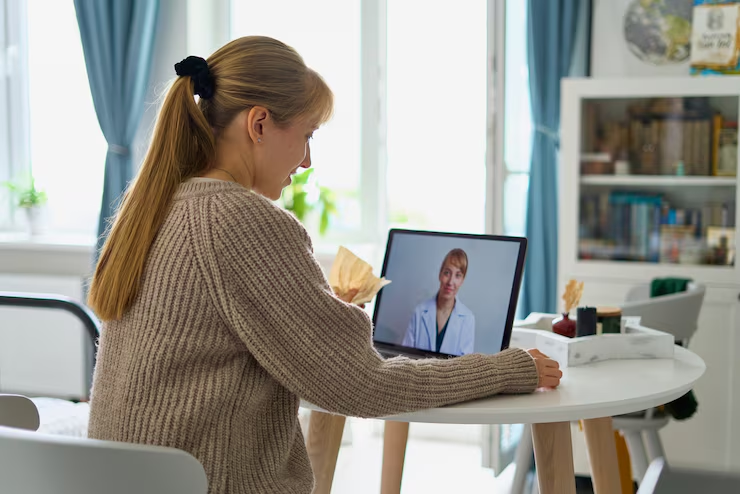
One of the most significant advances in spine care is the ability to access virtual second opinions. Dr. Ranasinghe offers virtual evaluations to patients worldwide, allowing them to receive specialized spine care without the need for travel.
Benefits of Virtual Second Opinions
- Convenience and Accessibility: Patients from rural areas or different countries can access specialized care without leaving home.
- Cost-Effectiveness: Virtual consultations typically cost a fraction of in-person visits, without the added travel and accommodation costs.
- Objective Evaluation: Virtual second opinions offer an unbiased assessment without the pressure often associated with in-person consultations.
- Comprehensive Analysis: Dr. Ranasinghe thoroughly reviews all submitted materials to provide a comprehensive evaluation.
Conclusion: Make Informed Decisions About Your Spine Health
Your spine health directly impacts your quality of life, making decisions about back pain treatment crucial. A back pain second opinion offers invaluable benefits, providing clarity about your diagnosis and treatment options. Whether through a virtual consultation or an in-person evaluation, a second opinion ensures that you make the best decision for your health, based on expert advice and up-to-date medical practices.
If you’re struggling with back pain, have been recommended for surgery, or aren’t seeing improvement with current treatments, Dr. Ranasinghe’s expert second opinion could provide the guidance you need. Don’t leave your spine health to chance – reach out today to schedule your back pain second opinion.
For more information or to schedule a consultation with Dr. Moksha Ranasinghe, visit Southern California Brain and Spine or call 213-369-4583 to book your appointment.
